2026-03-17
Solar panels charge the battery using electricity generated from the sun. This electricity is regulated by the charge controller before it is stored in the battery.
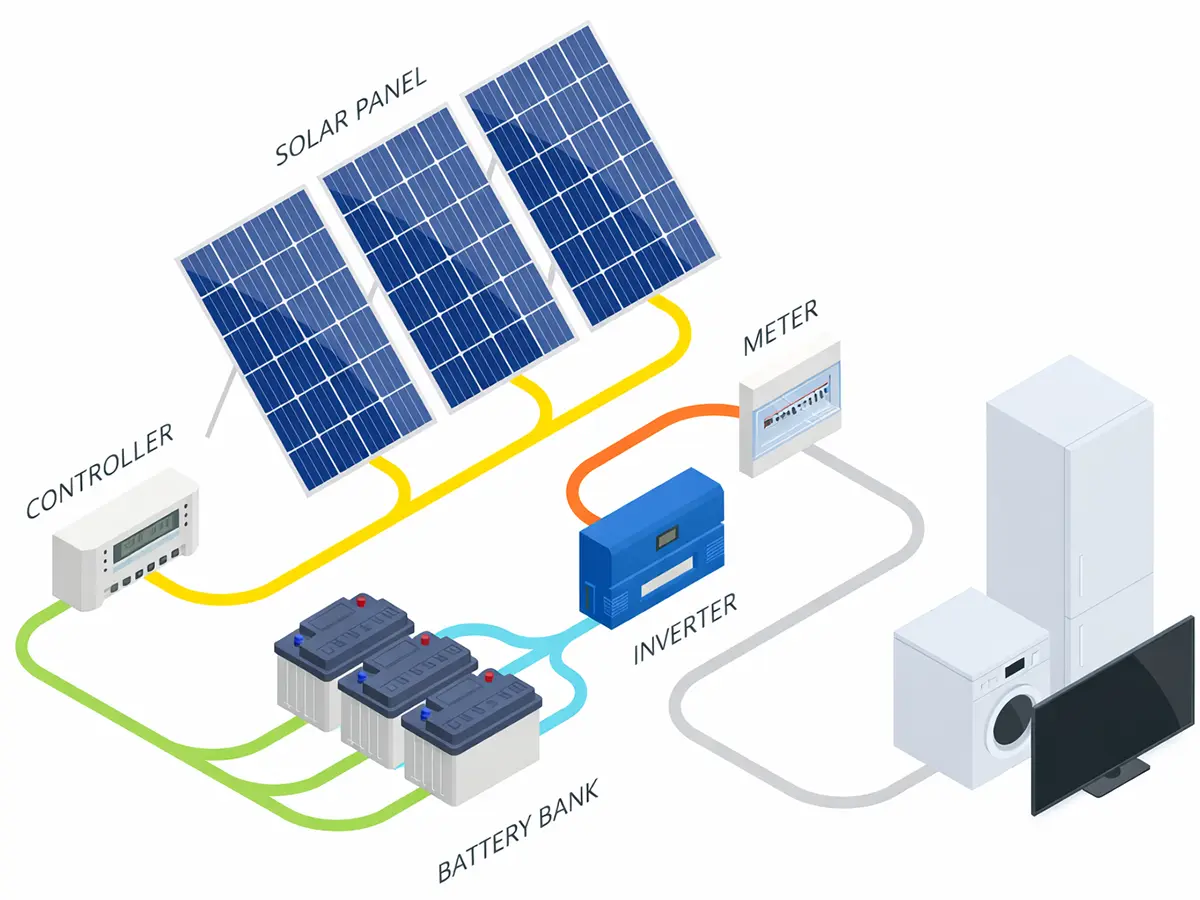
A simple explanation for the process is as follows:
To be precise, the process is as follows:
Solar panels are composed of photovoltaic cells. Sunlight is absorbed by these cells and converted into electricity.The electricity generated is proportional to the intensity of the sunlight received by the panel.
Efficiency is usually between 15% and 23%.The electricity generated is measured in watts.
For instance, a 400-watt solar panel will generate approximately 1.6-2 kWh/day.
Many people do not know about this process. A charge controller is a key component in the system. It ensures that the battery is charged in the safest possible way.
There are two types of charge controllers:
I have used both controllers in my system. MPPT is efficient in bigger systems. If you have a system larger than 500 watts, you should consider using an MPPT charge controller. This is because it is efficient by up to 30%.
The regulated electricity is then directed to the battery.
The most common batteries used in this system are lithium-ion and lead-acid batteries.
For instance, the characteristics of lithium-ion batteries are as follows:
| Battery Type | Charging Efficiency | Lifespan (cycles) | Depth of Discharge |
|---|---|---|---|
| LiFePO4 | 95–98% | 4000–6000 | 80–90% |
| Lead-Acid | 70–85% | 500–1000 | 50% |
It is clear that lithium-ion batteries have an edge in this system.
For instance, you have:
On a sunny day, you have:
There are a number of key factors that affect the overall performance of the system.
Sunlight Availability
Peak sun hours vary by location. Typical values are 3-6 hours/day.
Cloudy weather will have a drastic effect on the system.
Panel Angle and Orientation
Panels should face south if you are in the northern hemisphere.
Panel tilt should be equal to local latitude for optimal performance.
Temperature
In high heat, the panel’s efficiency is reduced.
Cooler temperatures mean better panel performance.
System Losses
There are energy losses in the system due to:
System losses are typically in the range of 10-20%.
From my experience with many installations, here are some common mistakes people make.
Not using a charge controller
You will damage the battery in no time.
Mismatch voltage
You need to match the voltage of the panel and the battery.
Not using a large enough battery
You will waste energy generated by the panel.
Not considering shading
You can lose as much as 80% or even more in some cases.
The solar panel and battery are DC-based, but the household appliances are all AC-based. That’s why an inverter is required.
You need an inverter when:
However, for DC-based appliances such as LED lights and DC-based refrigerators, the efficiency of the system will increase by avoiding the inverter.
The solar panel system is quite scalable for increasing energy requirements. You may:
The modular system is the most cost-effective solution in the long term.
The solar panel charging the battery may seem like an easy task. However, the efficiency of the solar panel system depends on the quality of the solar panel and the charge controller. The quality of the solar panel and the charge controller determines the efficiency of the solar panel system. For instance, the use of an MPPT charge controller and lithium batteries may make a significant difference in the solar panel system.