2025-12-19
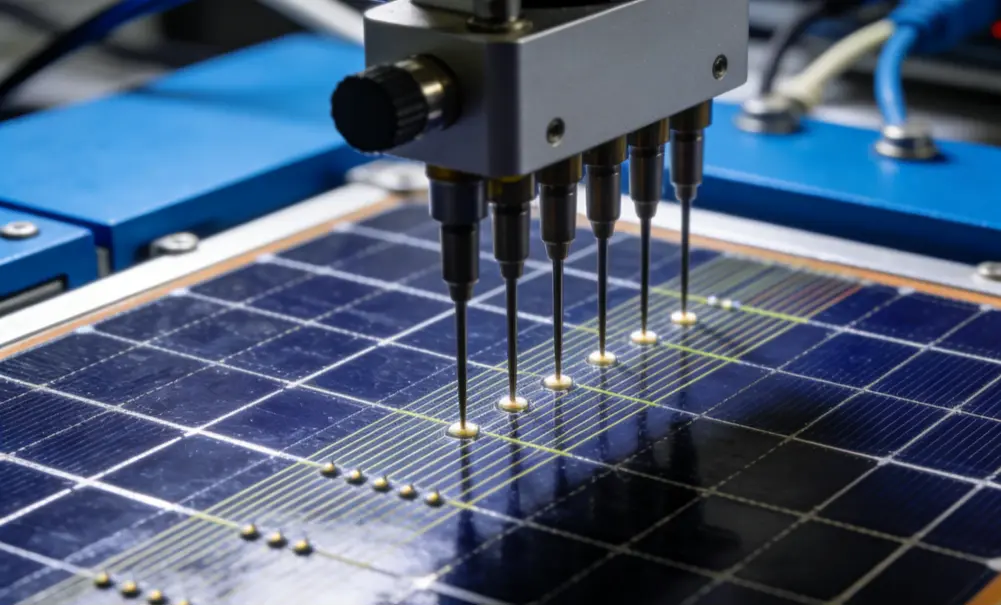
Want to know if your solar panels are performing as they should? Whether you're a homeowner, DIY enthusiast, or installer, testing your solar array is a key skill. This guide breaks down how to test solar panels in simple terms, highlighting the essential tools and methods.
Part 1: The Key Measurements and Your Testing Toolkit
Think of testing your panels like giving them a health check. Here are the vital signs to look for:
1.Open-Circuit Voltage (Voc): The voltage when the panel is not connected to anything (like "idle" potential).
3.Maximum Power Point (Pmax): The most important number—the actual maximum usable power the panel can produce.
4.I-V Curve: The complete "performance fingerprint." A graph showing how the panel behaves under all conditions.
Choosing Your Solar Battery Tester (Diagnostic Tool)
Your choice depends on your needs and budget:
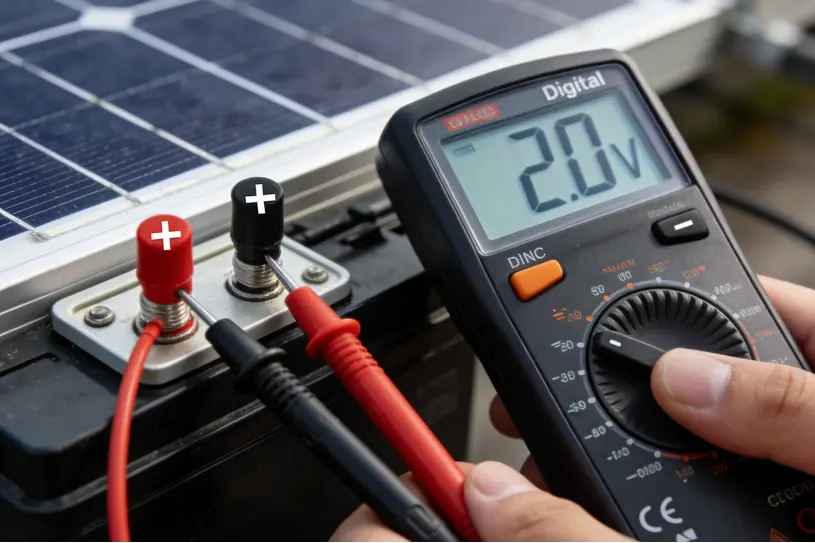
Digital Multimeter (DMM): The universal tool. Can measure Voc and Isc. A must-have for any toolbox.
Clamp Meter: Great for safely measuring current in a live system without disconnecting wires.
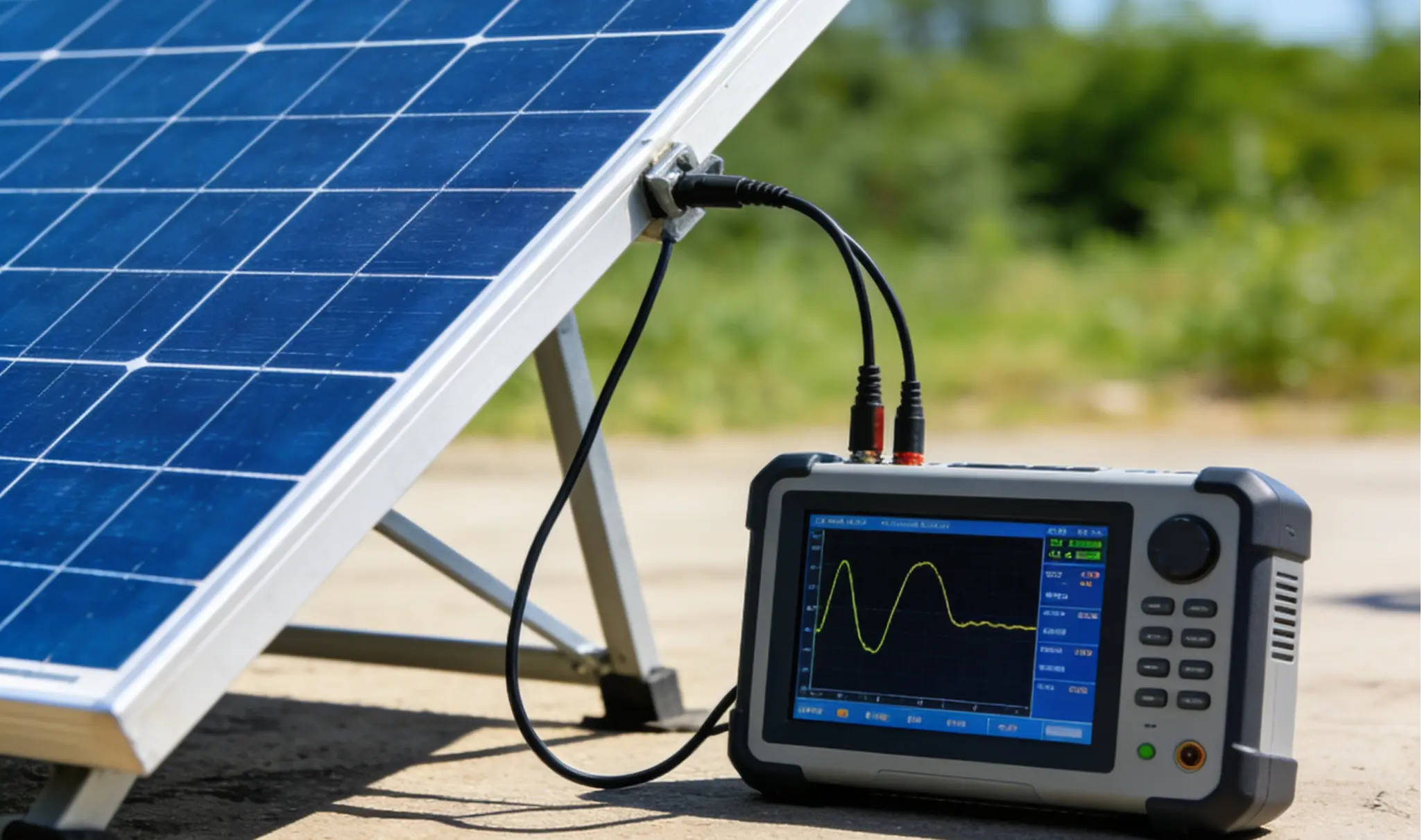
Portable I-V Curve Tracer: This is the ultimate solar energy battery diagnostic tool. It automatically performs a full scan in seconds, providing all key metrics (Pmax, Voc, Isc, etc.) and plotting the I-V curve against the panel's rated specs. It's the fastest way to validate performance and health. For installers, this battery analyzer for solar systems is indispensable.
Solar Simulator & Source Meter Systems: Provide perfectly controlled, repeatable lab conditions (STC). Extremely accurate but costly and not for field use.
Part 2: Step-by-Step Testing Guide & Pro Tips
SAFETY FIRST: Solar panels produce high voltage in sunlight! Always wear insulated gloves and safety glasses. Cover the entire panel with an opaque sheet to stop power generation before handling terminals.
Simple Field Test (Using a Multimeter)
1.Pick the Right Time: Test on a clear, sunny day around solar noon (10 AM - 2 PM).
2.Point at the Sun: Ensure the panel faces the sun directly with no shadows.
3.Measure Voc: Set your multimeter to DC Volts. Connect the probes to the panel's positive and negative leads. The reading should be close to the panel's nameplate Voc (slightly lower on hot days).
4.Measure Isc (Carefully!): Switch the multimeter to the 10A/20A DC Current setting. Briefly touch the probes to the terminals to get a reading, then disconnect immediately. Compare to the nameplate Isc.
Professional-Grade Test (Using an I-V Curve Tracer)
1.Connect: Attach the tester's clamps to the panel's terminals.
2.Configure: Enter the panel's nameplate specifications into the device.
3.Test: Uncover the panel, ensure full sun, and start the scan.
4.Analyze: The solar battery health tester will display the measured Pmax and efficiency. A healthy panel typically yields 90-105% of its rated power under good conditions. Review the I-V curve for smoothness—kinks or steps indicate potential problems.
Pro Tips for Accurate Diagnostics
Mind the Environment: For accurate comparisons, use an irradiance meter and infrared thermometer to measure sunlight intensity and panel temperature. Professional tools use this data to correct results to standard conditions (STC).
Read the "Fingerprint": A smooth, full I-V curve means good health. Irregular shapes can reveal hidden issues like cell cracks or faulty diodes.
Perform System-Level Checks:
Thermal Imaging: Use a thermal camera to quickly spot "hot spots" (failing cells) or loose, overheating connections.
Monitor Output: Regularly check your inverter's data. A sustained, unexplained drop in yield (e.g., >15%) signals it's time for a detailed check-up with your battery tester for solar storage units or panels.
Final Recommendations
For Homeowners/DIYers: Start with a multimeter to learn the basics of safely checking Voc and Isc.
For Solar Installers & Technicians: A Portable I-V Curve Tracer is the most valuable solar battery tester you can own. It provides definitive proof of performance and streamlines diagnostics.
When Buying or Validating Panels: Always insist on or perform an I-V curve test. It's the only reliable way to guarantee you're getting the power you paid for.
By understanding these methods and using the right solar energy battery diagnostic tool, you can confidently ensure your solar investment is operating at peak health and efficiency.