2025-12-08
In modern life, from cozy garden decor to reliable emergency lighting, various types of lights play an indispensable role. Faced with the dazzling array of solar lights with batteries and traditional battery-powered lights on the market, consumers often struggle to choose: Which one is better suited for their needs? What are the fundamental differences in how they work? How should we interpret the advertised "long runtime"? This article delves into the core mechanics of both types, providing a clear guide for your decision.
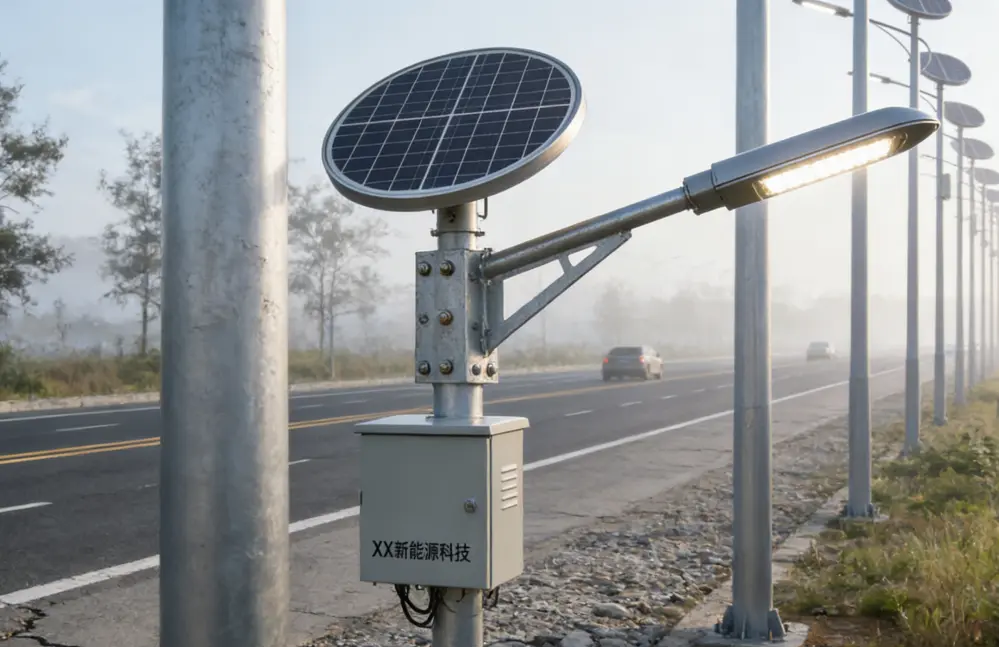
At their core, solar-powered lights with rechargeable batteries are highly integrated, self-sufficient micro clean-energy systems. They perfectly mimic the natural day-night cycle, automating the collection, storage, and release of energy.
Energy Harvesting: The heart is the solar panel. During daylight, photovoltaic materials on the panel create an electric current when exposed to sunlight, converting solar energy directly into DC electricity.
Energy Storage & Management: The generated electricity isn't used immediately. Instead, it is sent through a crucial "brain" – the charge controller – and safely stored in a built-in rechargeable battery (typically lithium-ion). The controller meticulously manages the charging process to prevent overcharging and protects the battery from deep discharge damage.
Intelligent Illumination: At dusk, a photosensor in the controller detects fading light and automatically triggers the lighting circuit. The stored energy powers efficient LED chips to produce light. Most modern models also integrate PIR motion or radar sensors, enabling "bright-on-motion, dim/off-after" functionality, drastically improving energy efficiency.
Regeneration Cycle: The system resets at dawn, beginning a new energy harvesting cycle.
Weather & Sun Exposure: This is the most significant variable. Clear skies allow for optimal charging, while prolonged cloudy, rainy, or snowy days can lead to insufficient charge, causing dim light or early shutoff.
Hardware Configuration: The conversion efficiency and size of the solar panel, coupled with the capacity (in mAh) of the rechargeable batteries, determine the system's "power plant" output and "reservoir" size.
Operating Mode:
Constant-On Mode: With a fully charged battery, these solar garden lights with batteries included typically provide 4 to 12 hours of continuous light. Runtime shortens if the previous day's charge was inadequate.
Smart Sensor Mode: The current mainstream mode. Thanks to minimal standby power draw and high brightness only when triggered, a full charge can easily cover the intermittent lighting needs for several nights, offering the best overall experience.
Pros: Zero electricity costs, eco-friendly; extremely flexible installation, no wiring needed; automatic operation, hassle-free; outstanding long-term economy.
Cons: Higher initial purchase cost; performance is significantly affected by weather and seasons; brightness is often lower than comparable mains-powered or high-power battery lights; requires placement in direct sunlight.
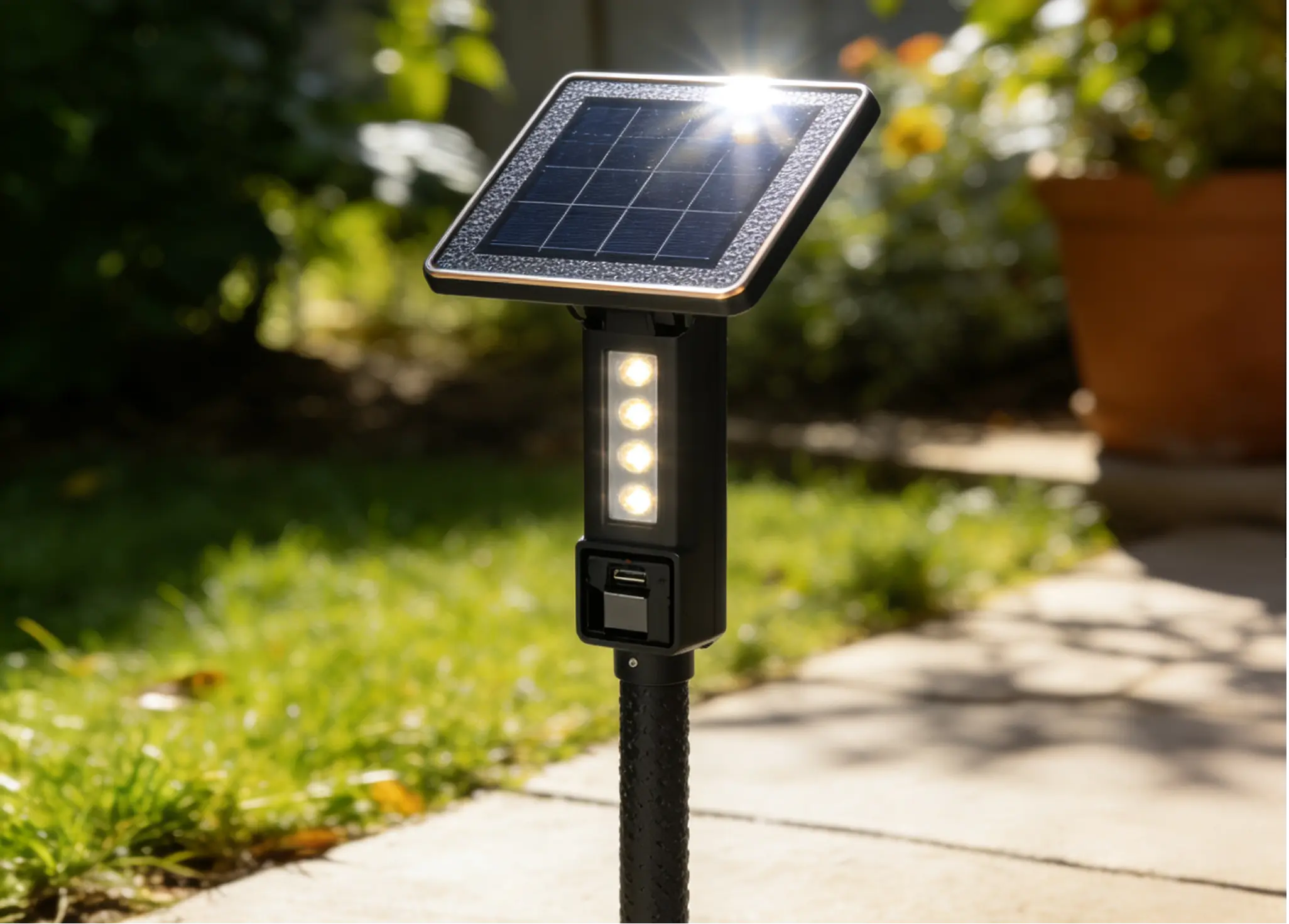
Unlike the "closed loop" of solar lights, traditional battery lights are purely energy consumption devices with a straightforward, linear operation.
Energy Reserve: All energy comes from pre-installed disposable batteries (e.g., alkaline) or a user-replaceable rechargeable battery pack.
Instant-On: The user flips a switch, converting the battery's chemical energy directly into electricity to power the LED light source. Some models include simple circuits for multi-level dimming.
Deplete & Replace: When the batteries are exhausted, the light goes out. The user must manually replace them with new batteries or remove rechargeable ones for external charging.
Total "Fuel" Capacity: The stated capacity of the batteries. Disposable batteries have a fixed capacity, while rechargeables are clearly labeled with their storage capacity in milliamp-hours (mAh).
The Light's "Appetite": The power (wattage) and number of LEDs determine the operational current (mA). Higher power means faster drain.
A Simple Formula: Theoretical Runtime (hours) ≈ Total Battery Capacity (mAh) / Light Operating Current (mA). For example, a light drawing 300mA powered by a 3000mAh battery pack has a theoretical runtime of about 10 hours.
Typical Scenario: A quality LED camping lamp using 3 AA batteries can often last 10-20 hours at medium brightness. A high-lumen flashlight on its maximum setting might only last 2-4 hours.
Pros: High, stable brightness output, unaffected by environment; ready-to-use, excellent portability; low purchase barrier; highly reliable in emergency and mobile situations.
Cons: Ongoing cost of purchasing/replacing batteries; environmental pollution risk from improper disposal of single-use batteries; requires manual monitoring of battery level and maintenance.
For a clearer comparison, the core differences are summarized below:
| Feature | Solar Lights with Batteries | Traditional Battery-Powered Lights |
|---|---|---|
| Energy Philosophy | Renewable cycle, sourced from nature | One-way consumption, sourced from reserves |
| Core System | Generation (Panel) + Storage (Battery) + Smart Control | Storage (Battery) + Consumption (LED Circuit) |
| Runtime Logic | Dynamic cycle, tied to solar input | Static duration, tied to battery capacity |
| Typical Runtime | Sensor Mode: Covers several nights; Constant-On: 4-12 hrs (full charge) | Medium Brightness: 10-20 hours (per battery set) |
| Maintenance | Clean panel; nearly maintenance-free | Regularly replace/charge batteries |
| Long-Term Cost | Higher upfront cost, minimal ongoing cost | Lower upfront cost, ongoing battery expenses |
| Environmental Impact | Low-carbon, eco-friendly | Potential pollution from battery waste |
| Best Use Case | Fixed Outdoor Locations: Yard, patio, garden, pathway, landscape lighting | Mobile/Emergency Use: Camping, hiking, repairs, indoor backup, task lighting |
Returning to the initial question: Which is better, solar lights with batteries or battery-powered lights? The answer isn't absolute but entirely depends on your specific needs.
Choose solar-powered lights with rechargeable batteries if your need is for fixed outdoor lighting with good sun exposure, and you desire a "set-and-forget" automated solution that prioritizes long-term savings and environmental benefits.
Choose traditional battery lights if you require reliable, high-brightness light unaffected by weather for indoor emergencies, portable outdoor work, or temporary high-intensity lighting.
Technology also brings hybrid solutions, such as lights featuring both solar panels and USB charging ports, offering greater flexibility. By understanding the principles behind their operation, you can see past marketing claims. Let the true logic of runtime and your actual usage scenario guide you to illuminate your space with the most suitable, economical, and reliable light.