2025-12-05
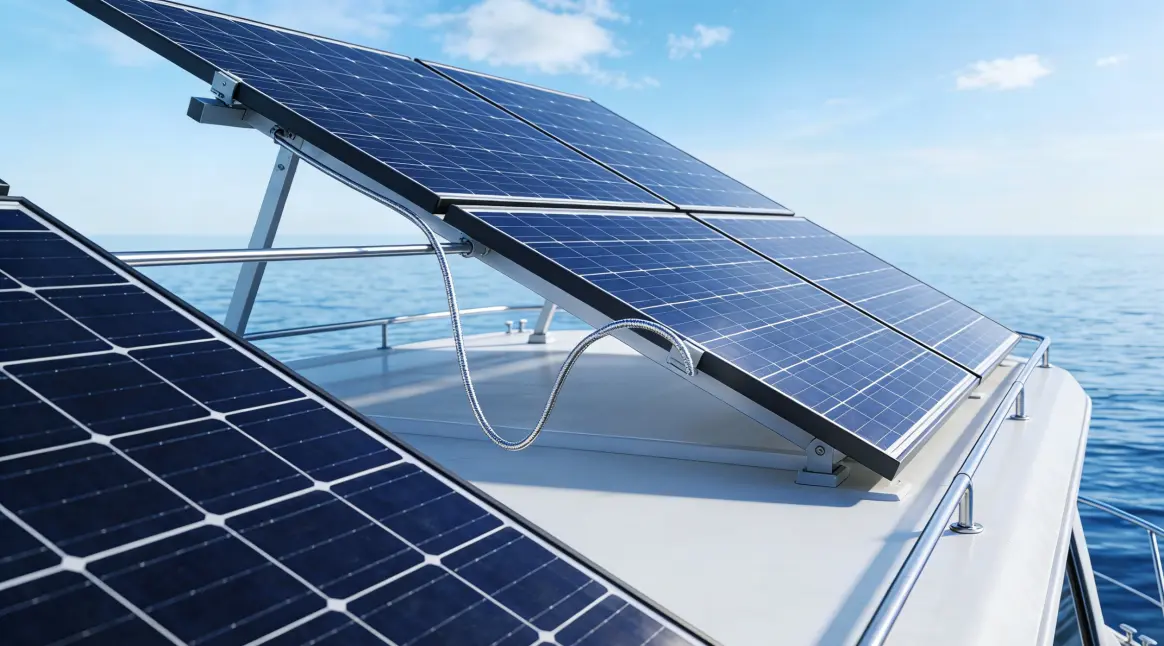
Out on the water, nothing is more annoying than finding out your boat battery is dead. You’re ready for a relaxing day, maybe some fishing or just floating around — and boom, no power. I’ve seen it happen too many times, honestly. That’s why more and more boat owners today are turning to solar charging boat batteries as a reliable, low-effort solution.
And yeah, it actually works really well.
First of all, sunlight is free. When your boat is sitting at the dock, on a trailer, or even slowly moving on the water, your solar system can keep charging the battery in the background. No noise, no fuel, no mess.
Using solar power for boat batteries means you don’t have to rely only on shore power or constantly run the engine just to keep the battery alive. It’s cleaner, cheaper in the long run, and honestly a lot more convenient.
Plus, modern panels are much better than they used to be. They’re lighter, stronger, and don’t look so ugly on the boat anymore.
A solar boat battery charger is basically a solar panel (or multiple panels) connected to your boat’s battery through a charge controller. The panel absorbs sunlight and turns it into electricity, which is then stored in your battery.
Some people think this is super complex, but nah… it’s actually pretty simple:
Solar panel
Charge controller (very important, don’t skip it)
Cables
Your boat battery
That’s the basic setup for most small and medium boats.
If you want something more advanced, you can build a full marine solar battery charging system which can power not only your battery, but also your lights, GPS, fish finder, mini fridge, and other equipment.
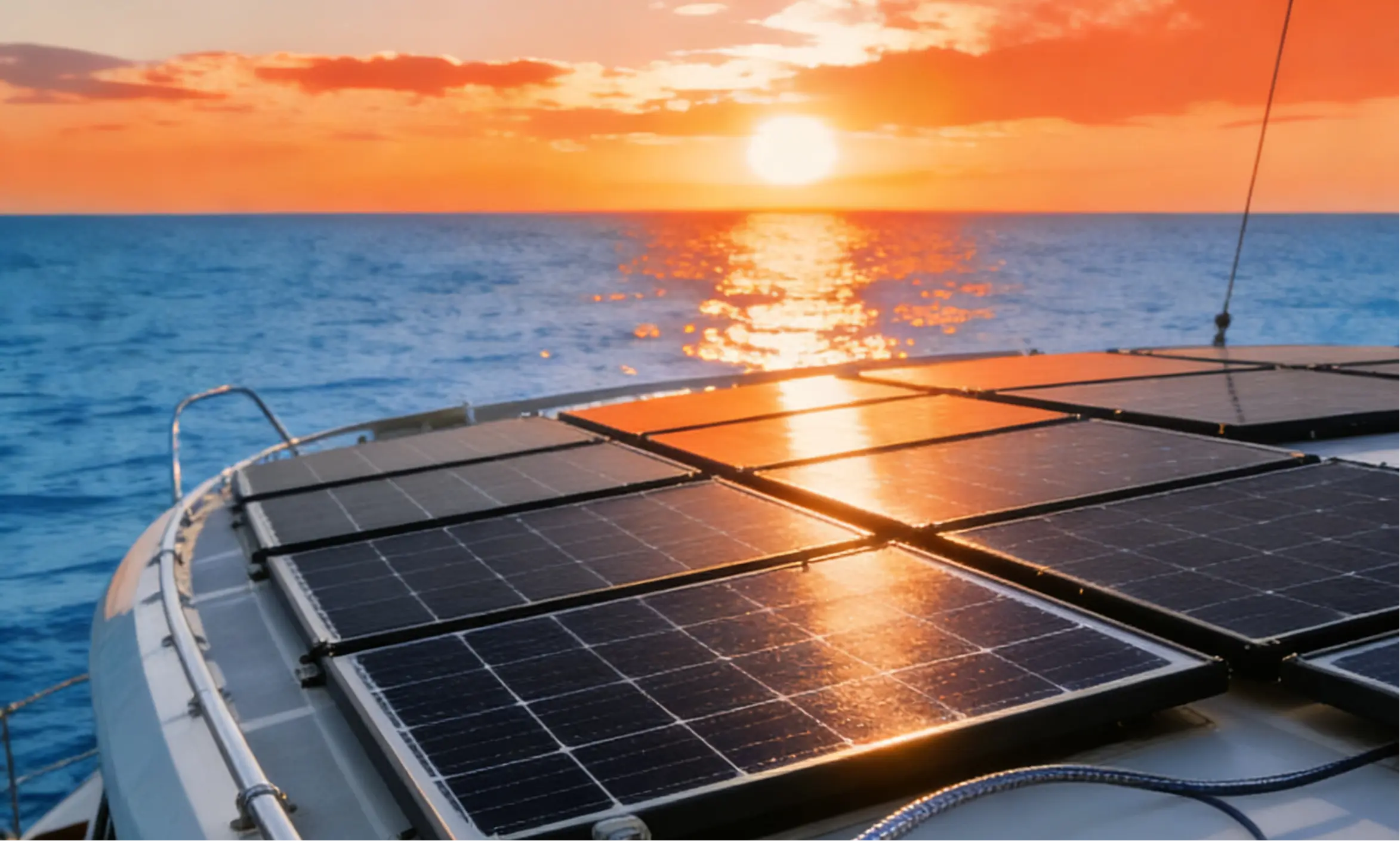
Let’s say your boat has a 12V battery. If you install a 100W solar panel with a good controller, on a sunny day it can charge around 30–40Ah depending on conditions. That’s enough to keep your battery healthy and slowly refill what you used the night before.
For bigger boats, people usually install 2–4 panels and connect them to several batteries. That way, solar panel charging for boats can cover almost all daily electricity needs.
Even when the sky is a little cloudy, you’ll still get some power, just less. But hey, something is better than nothing, right?
Not all solar panels are good for boats. You should look for:
Waterproof or marine-grade panels
Anti-corrosion frame
Strong tempered glass
A proper solar charger for marine batteries with overcharge protection
Also, flexible panels are popular for boats because they can be mounted on curved surfaces and don’t take much space.
Very important: Always use a charge controller between the solar panel and the battery. Otherwise, you might damage the battery over time.
A few simple tips if you plan to install it yourself:
Place the panel where it gets maximum sun (no big shadows)
Make sure it’s fixed tightly (wind + waves = trouble)
Protect cables from water and salt
Double-check polarity before connecting
Trust me, messing up + and – is not a fun experience. I did that once… and yeah, lesson learned.
In my opinion — yes, 100%.
For fishing boats, sailing boats, yachts, or even small speedboats, solar charging boat batteries saves money, reduces maintenance stress, and gives you peace of mind.
No more “will my battery survive the night?”
No more “should I start the engine just to charge?”
Just sun… doing its job quietly.
And the best part? Once it’s installed, it works every single day, even when you’re not thinking about it.