2025-12-02
The fast lane of energy transition has just gotten faster for Spain. As renewable penetration continues to grow, urban grids feel the weight of fluctuating solar and wind power, thus driving demand for grid flexibility-something that's pushing Battery Energy Storage Systems (BESS) to the forefront in changing how cities like Madrid, Barcelona, Seville, and Valencia manage power stability, renewable integration, and electrified transport.
"Spain BESS City" is not just a buzzword anymore.
It reflects a clear market direction:
Spanish cities are adopting BESS to build stronger, smarter, and more resilient energy infrastructures.
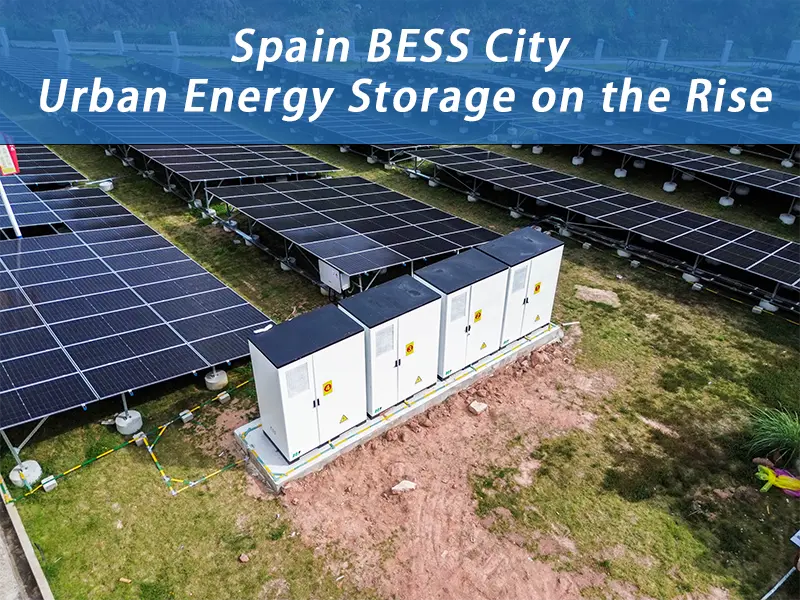
Spain enjoys some of Europe's best solar irradiance, combined with strong wind power output. This results in:
Urban BESS helps in stabilizing these fluctuations and improves energy efficiency.
The significant load expansion in cities is driven by:
It requires fast-response, high-flexibility energy solutions, just what BESS provides.
Expanding or reinforcing a grid is expensive and slow.
Deploying modular 1–20 MWh BESS units is:
The large difference between peak and off-peak tariffs in Spain encourages BESS installations for the commercial and industrial users, enabling several cost-saving strategies, including load shifting and peak shaving.
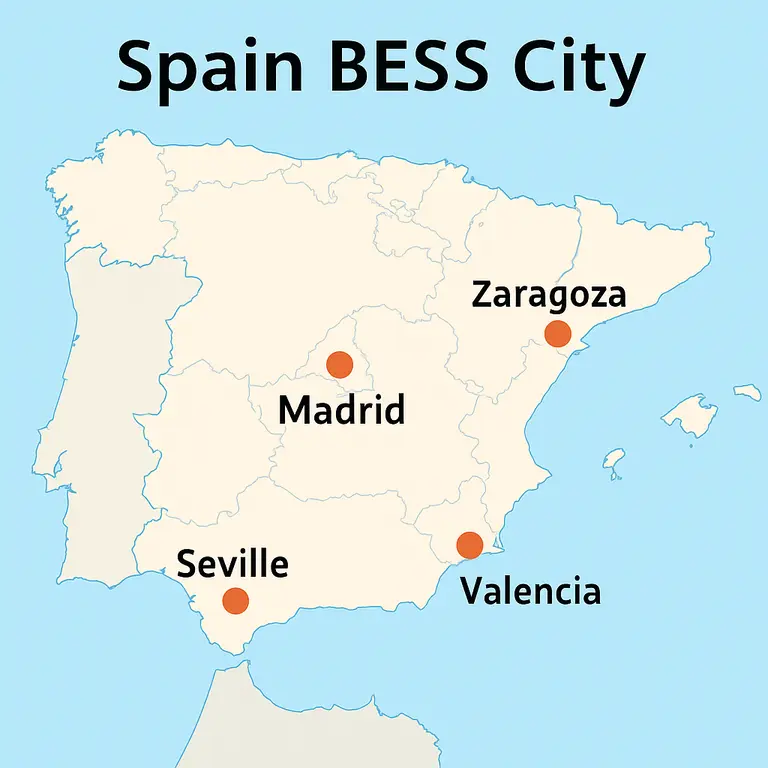
Below are the major cities that shape the “Spain BESS City” landscape, each representing a unique model of urban energy transformation.
The heavy population and dense commercial activity in Madrid put tremendous pressure on the grid. BESS applications here include:
Project Example:
Madrid Urban Grid Balancing Program
Multiple 1–5 MWh BESS units deployed at distribution nodes to support grid stability.
Barcelona is Spain's benchmark smart city and an early adopter of urban energy storage.
By demand is driven:
Project Example:
Barcelona Port Microgrid BESS (10 MWh)
Supports peak shaving, emergency backup, and the port's transition toward clean energy.
Strong industries and a port drive energy demand in Valencia.
Common BESS applications:
Project Example:
Valencia Industrial Park Energy Storage Cluster
Facilities deploy 500 kWh–2 MWh BESS for cost savings and grid flexibility.
Seville, with its exceptional solar resources, is a natural hotspot for solar-plus-storage integrations.
Use cases include:
Project Example:
Seville Solar-BESS Hybrid Farm (20MWh)
As the logistics capital of Spain, Zaragoza leverages BESS to support:
Below is a comparison chart summarizing major types of BESS commonly deployed in Spanish cities in 2025.
Table: Typical Spain BESS City Project Types (2025)
| BESS Type | Capacity Range | Main Urban Use Cases | Typical Deployment Cities | Growth Trend |
|---|---|---|---|---|
| Grid Balancing BESS | 1–5 MWh | Frequency control, voltage support, peak shaving | Madrid, Barcelona | ⭐⭐⭐⭐ |
| C&I Energy Storage | 500 kWh–20 MWh | Load shifting, demand charge reduction, backup | Valencia, Zaragoza | ⭐⭐⭐⭐⭐ |
| EV Fast-Charging BESS | 250–800 kWh | Reducing grid stress, improving charging speed | Barcelona, Madrid | ⭐⭐⭐⭐⭐ |
| Solar Microgrid Storage | 100 kWh–5 MWh | PV self-consumption, backup power | Seville, Malaga | ⭐⭐⭐⭐ |
| City Resilience BESS | 1–10 MWh | Emergency power & disaster resilience | Madrid, Bilbao | ⭐⭐⭐ |
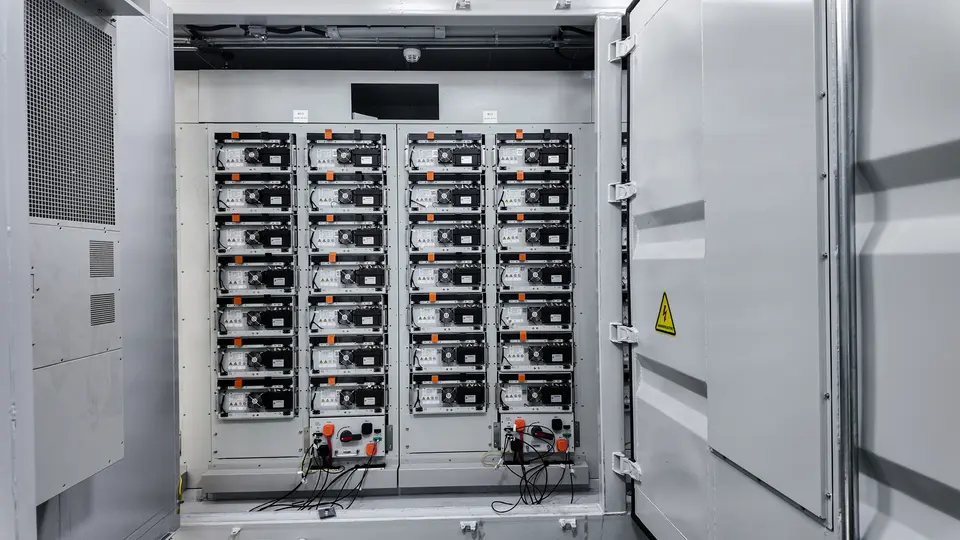
Challenge:
Fast-charging stations create sudden, high power demand, and this stresses the urban grid.
Solution:
Install 500–800 kWh BESS units as load buffers.
Results:
This is a representative example of Spain BESS City deployment in urban transport.
Challenge:
Large PV output during the daytime but high residential consumption at night.
Solution:
Deploy 5-20 MWh BESS to store excess solar generation.
Results:
Including PERTE funds and EU recovery mechanisms.
EV adoption and commercial expansion further accelerate this trend.
Cities require BESS to absorb and utilise excess production.
4. Declining Storage System Costs Prices of batteries and inverters keep falling.
5. Firms Actively Pursue Lower Energy Costs Industrial and commercial facilities treat BESS as a core energy-saving asset.
1. What does “Spain BESS City” refer to?
It refers to the development, deployment, and application of BESS across Spanish cities.
2. Which cities are leading BESS adoption?
Madrid, Barcelona, Valencia, Seville, and Zaragoza.
3. What are the common BESS capacities in Spanish cities?
Most systems range between 1–20 MWh, while EV charging BESS falls typically between 250–800 kWh.
4. Who can benefit from Spain's urban BESS market?
This includes battery manufacturers, BESS integrators, EPC contractors, distributors, and grid service providers.
5. Must BESS projects in cities obtain city-level permits?
Yes, though requirements vary by municipality.