2026-05-26
Stable and reliable power supply is among the top concerns for telecom network infrastructure in remote locations. A tower-mounted solar panel system provides an effective solution by fitting photovoltaic panels directly on or around towers that house base stations, radio transmitters, battery units, and communication equipment. In most cases, such solar systems can cut down diesel use by 50%-90%, particularly in remote locations where grid connectivity is poor.
With telecommunication coverage extending into rural and hilly areas, more and more telecom providers have turned to tower-mounted solar energy. Our company, LZY Energy, is witnessing an increasing interest from telecom companies in finding stable power sources at reduced operational costs.
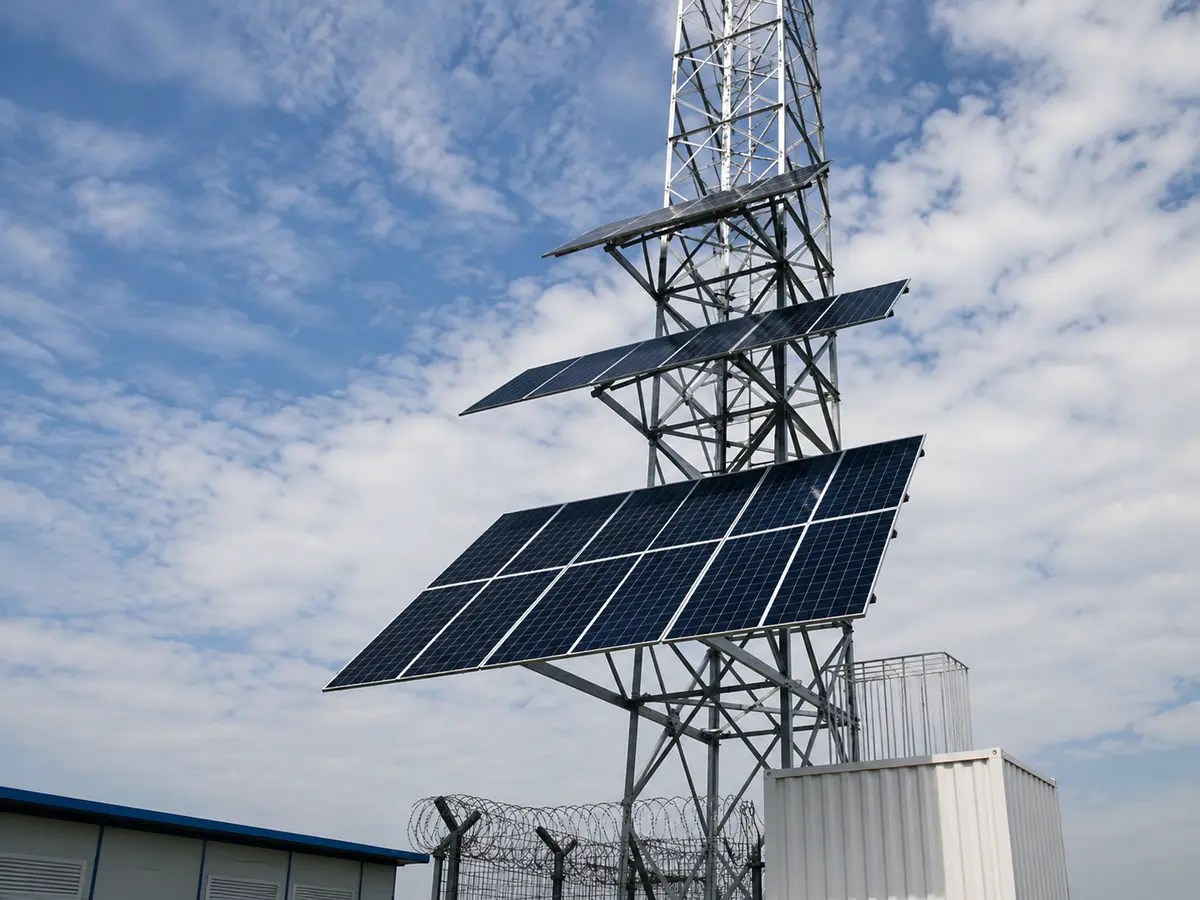
Solar panel tower mounts are structures that help connect the solar modules directly to telecom towers or tower infrastructure. Unlike conventional ground-mounted solar farms, these solutions are usually smaller and built for telecom operations.
Common components that work together include:
This type of solar farm is known as "site overlay solar" in China because it overlays an existing telecom site with solar installations without expanding the land area.
Telecom companies encounter three basic issues:
Solar energy addresses all of these challenges.
An appropriately installed solar tower system can:
This is particularly significant in the case of 4G and 5G telecom towers, which require increasing amounts of power.
There are various types of mounting structures depending on the type of telecommunication tower.
The panels can be mounted directly onto the legs of the towers using custom-made metal brackets.
Strengths
Weaknesses
The poles are installed around the telecom tower to mount the solar panels.
Strengths
Weaknesses
The solar panels are mounted on the rooftop of the equipment shelter of the telecom tower.
Strengths
Weaknesses
Below is a simplified example of a telecom tower solar hybrid system.
| Component | Typical Specification |
|---|---|
| Solar Panels | 5kW – 20kW |
| Battery Type | LiFePO4 |
| Battery Capacity | 10kWh – 100kWh |
| Controller | MPPT Hybrid Controller |
| Backup Source | Diesel Generator |
| Output Voltage | 48V DC |
| Monitoring | Remote IoT Platform |
Many telecom operators now prefer LiFePO4 batteries because of their long cycle life and better thermal stability. This is particularly important for high-temperature outdoor sites.
That depends on how much energy consumption and sunlight the location gets.
For example, a rural telecom tower could use:
While a 5G site can have the following energy consumption rate:
The sizing of solar panels could be as follows:
| Daily Site Load | Recommended Solar Capacity |
|---|---|
| 5kWh/day | 2kW – 3kW |
| 20kWh/day | 6kW – 8kW |
| 50kWh/day | 15kW – 20kW |
Besides, when designing solar systems for telecom towers, you should take into account:
And one thing that is commonly done wrong in telecom solar power solutions is not enough battery capacity.
This is an important section.
Cell phone towers were originally built to support antennas and equipment for telecommunications purposes rather than solar panels. This increases the wind pressure and alters the loading pattern.
Pre-installation checks should include:
Steel with hot-dip galvanization and aluminum alloy have been widely used due to their anti-corrosive properties.
Salt corrosion from salt water spray is common on the coastline, and stainless steel fasteners are often preferred there.
A telecom provider from Southeast Asia updated an off-grid rural cell tower with a hybrid solar system.
Initial Setup
Updated Setup
Results after one year
| Metric | Before | After |
|---|---|---|
| Diesel Consumption | 100% | Reduced by 78% |
| Generator Runtime | 24 hrs/day | 5 hrs/day |
| Maintenance Visits | 2 per month | 1 every 3 months |
| Site Uptime | 92% | 99.5% |
However, the most significant benefit was not saving fuel but improving the uptime of cell towers, thereby increasing the quality of service for users.
Despite the maturity of technology, there are some challenges to consider.
There are some tower installations which lack sufficient space for the installation of solar panels.
Telecom towers which are located in rural areas are often affected by vandalism and theft, necessitating secure mounting design and remote alarms.
There are climatic conditions that pose risks to installations such as strong winds, snowing, and sandstorms.
With 5G requiring more electricity than other generations, solar panel installations need upgrades earlier than predicted.
Smart hybrid models of energy systems in telecommunications are in trend now.
These include:
Moreover, some telecom providers have already tested vertical bifacial solar panels that are mounted directly on towers to save space on installation.
Lowering costs of renewable energy further may result in universal use of solar-powered communication infrastructure in the future.
Selecting an appropriate mounting solution is essential when building telecom solar systems, just as selecting solar panels and batteries themselves. Otherwise, your equipment may require more maintenance and may operate improperly or even be unsafe. But with a high-quality mounting system in place, you could expect reliable work of your telecom facilities for more than 20 years.