2026-05-07
A telecom shelter is a facility that is built to accommodate important equipment needed for telecommunications, such as power supply, battery, transmitters, servers, and network equipment. The purpose of a telecom shelter is to safeguard the equipment from the environment and ensure network stability.
With the growing expansion of mobile networks and data demands, telecom shelters have gained popularity in recent times. It is now being extensively used in cell sites, fiber optics network, broadcasting systems, emergency communications projects, and remote monitoring facilities.
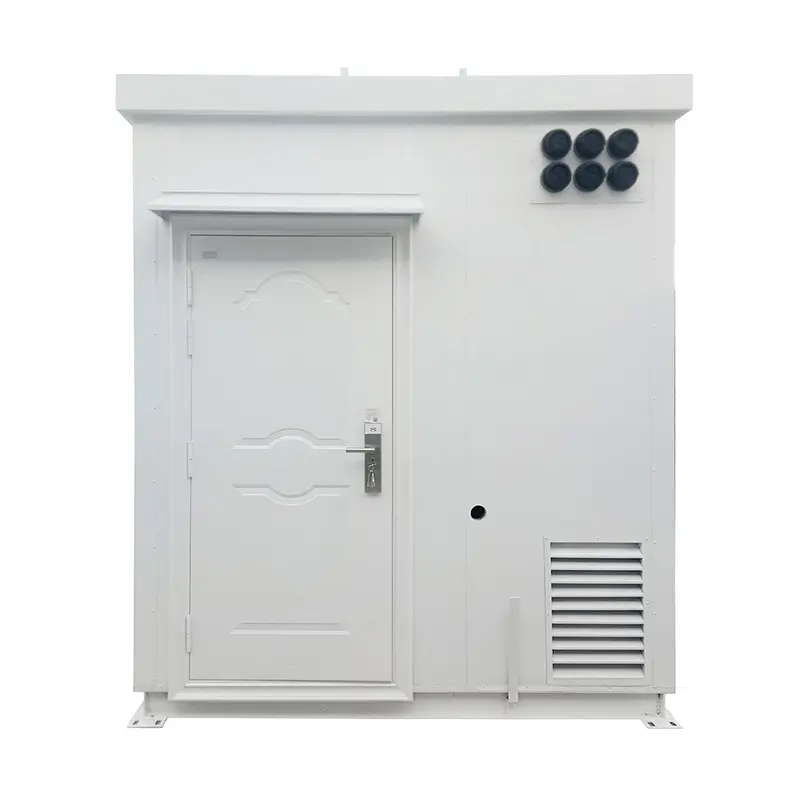
The telecommunication equipment must function 24/7 and work in various challenging settings. Lack of protection may result in equipment malfunctioning and network instability, which would be costly and time-consuming.
A good telecom shelter allows users to get the following benefits:
In simple words, telecom shelters can be considered as miniature technical rooms dedicated to communication systems.
Typically, a telecom shelter will have numerous interconnected systems.
It consists of:
Power is essential as telecom services cannot operate without power.
Telecom systems create much heat. Therefore, telecom shelters employ:
In hot climates, effective cooling is directly linked to equipment performance.
The telecom shelter accommodates racks of telecom systems such as:
Correct rack design promotes better airflow and ease of access.
Modern telecom shelters may also have:
Such components make it possible for managers to check the environment from afar.
Each project demands its own design of shelters.
Designed for standalone placement in outdoor environments. Commonly used in:
Usually, these shelters are weather-resistant and rust-resistant.
This type of shelter is mobile and used in:
The mobility factor is one of its biggest advantages.
Made from ISO container designs, they offer:
Containerized telecom shelters are more commonly used today for 5G projects.
The shelter structure itself greatly affects durability and performance.
| Material | Advantages | Limitations |
|---|---|---|
| Steel | Strong and secure | Heavier, may require anti-corrosion treatment |
| Aluminum | Lightweight and corrosion-resistant | Higher material cost |
| Sandwich Panels | Good insulation performance | Moderate structural strength |
| Stainless Steel | Excellent durability | Expensive for large projects |
The implementation of 5G infrastructure has altered telecom requirements dramatically.
Compared to their predecessors, 5G devices:
Thus, today’s telecom shelters have shifted their emphasis to:
Based on my practical experience in energy storage and communications infrastructure developments, the proper thermal protection is currently the major challenge in the design process. A poorly designed telecom shelter can function well during tests but demonstrate instability when under maximum load for several months.
Below is a simplified example of a medium-sized outdoor telecom shelter configuration.
| Specification | Typical Value |
|---|---|
| External Dimensions | 3000mm × 2500mm × 2800mm |
| Insulation Thickness | 50mm–100mm |
| Operating Temperature | -40°C to +55°C |
| Protection Rating | IP55/IP65 |
| Cooling Capacity | 3000W–12000W |
| Power Input | AC or Hybrid Solar |
| Service Life | 15–25 Years |
Actual specifications vary depending on climate conditions and project requirements.
The selection of a telecom shelter goes beyond its capacity. Some factors are technically important.
Telecom shelter in deserts, coastal areas, and cold environments have different insulation and cooling systems.
High density in terms of the load will require more cooling capabilities.
Remote telecom shelters often use:
Combination power systems are increasingly becoming popular in telecom stations.
Modular designs that can accommodate future expansion of facilities are preferred.
Applications of telecom shelters extend beyond cellular communication in numerous other sectors.
Some of the major applications are:
The growing digital infrastructure in the world is increasing the requirements for telecom shelters on an ongoing basis.
A telecom shelter is not just an equipment box; it is a vital part of the infrastructure that will directly influence the performance of your network, the life of your equipment, and the efficiency of your operations.
As the networks shift to 5G, edge computing, and smart infrastructure, so will the telecom shelters. Selecting the right one will help save you money on maintenance and ensure better operation.
If you need custom telecom shelters, container communication rooms, or power systems for your next telecom infrastructure project, we invite you to work with us, as LZY Energy can assist with your next deployment.