2026-03-24
Adding batteries to your solar system is absolutely possible, and in most cases, this is done by adding a compatible battery bank to your existing inverter, charge controller, and solar panels.
Before getting into the details of wiring and other components, it is helpful to get an understanding of why you should add a battery to a solar system.
The primary benefits of adding a battery to a solar system are:
From my experience working with residential solar, I have found that most people begin with a solar system without a battery bank installed, and this is usually due to costs. However, they soon realize that they want to add a battery bank to their system.
Before you begin, you should check what type of system you have:
If you have a grid-tied system, you likely have a grid-tied inverter, and this type of inverter cannot be directly paired with a battery bank.
Not all batteries are created equal. In today's world, the best type of battery available in the market is the LiFePO4 (Lithium Iron Phosphate) battery.
Comparison of popular types of batteries:
| Battery Type | Lifespan (Cycles) | Efficiency | Maintenance | Safety |
|---|---|---|---|---|
| Lead-Acid | 500–1,000 | 70–80% | High | Medium |
| Lithium-ion | 3,000–6,000 | 90–95% | Low | High |
| LiFePO4 | 4,000–7,000 | 95%+ | Very Low | Very High |
Most projects done by LZY Energy use the LiFePO4 type of batteries. This type of battery has a higher lifespan and better thermal stability.
Most DIY projects fail in this step.
You have three options:
Option A: Change to a Hybrid Inverter
Option B: Add a Battery Inverter (AC Coupling)
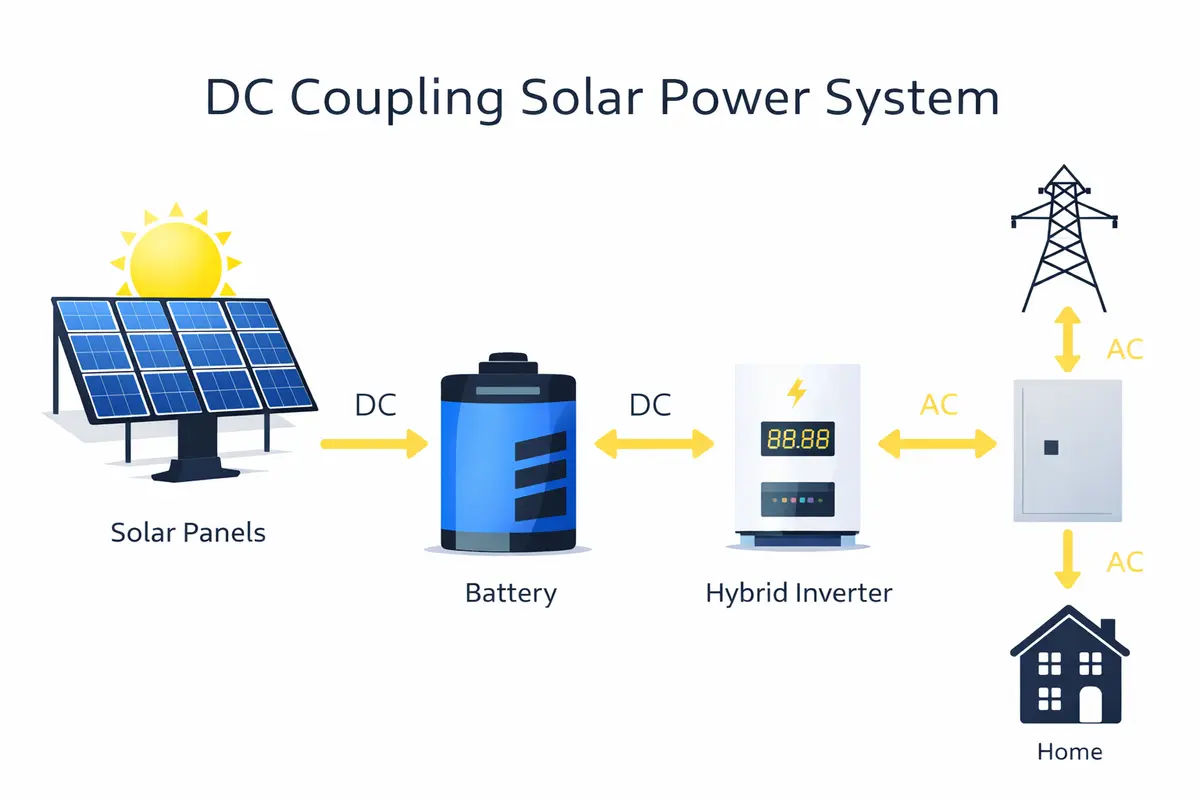
Option C: Use a Charge Controller (DC Coupling)
The selection of the battery bank depends upon your needs.
Basic formula:
Battery Capacity (kWh) = Daily Load x Backup Hours / Depth of Discharge
For example:
| Parameter | Value |
|---|---|
| Daily energy usage | 10 kWh |
| Backup requirement | 8 hours |
| Battery DoD (80%) | 0.8 |
| Required capacity | ~10 kWh |
Pro tip: Oversize your batteries slightly (10-20%) to account for inefficiencies.
A Battery Management System (BMS) is an essential component in a renewable energy system, and it is responsible for:
Most lithium-based batteries, including LZY Energy, have a BMS installed in their products.
It is recommended to hire a licensed electrician to carry out this installation.
The following are the components to be included in this installation:
Safety is a top concern in this installation, and improper wiring could lead to system failures or worse.
The following is a real-world case study of a hybrid renewable energy system installation:
| Item | Before Upgrade | After Upgrade |
|---|---|---|
| System Type | Grid-tied | Hybrid |
| Solar Capacity | 5 kW | 5 kW |
| Battery Storage | None | 10 kWh LiFePO4 |
| Backup Duration | 0 hours | ~8 hours |
| Grid Usage Reduction | — | 60% |
There are a number of common mistakes that even experienced users face with battery backup systems. These include:
One mistake that I have seen many users face is trying to “cheap out” on compatibility. This usually ends up costing users more money in the end.
| Feature | AC Coupling | DC Coupling |
|---|---|---|
| Retrofit Ease | Easy | Moderate |
| Efficiency | Slightly lower | Higher |
| Cost | Medium | Medium-High |
| Flexibility | High | Moderate |
For existing systems, AC coupling is usually the best approach.
One of the best upgrades that you can do for your solar system is the addition of batteries. This turns your solar system from an energy generator into an actual energy management system.
If you are considering this upgrade for your solar system, the first step is compatibility and then sizing and safety considerations. A well-designed battery backup system can last 10+ years and provide a much higher return on investment.
If you would like, I can help you figure out the actual battery size or a configuration that will work best with your existing system.