2026-03-03
A 10kW solar system can produce 35 to 50 kWh of electricity daily. In a year, the solar system can produce 12,000 to 18,000 kWh of electricity.
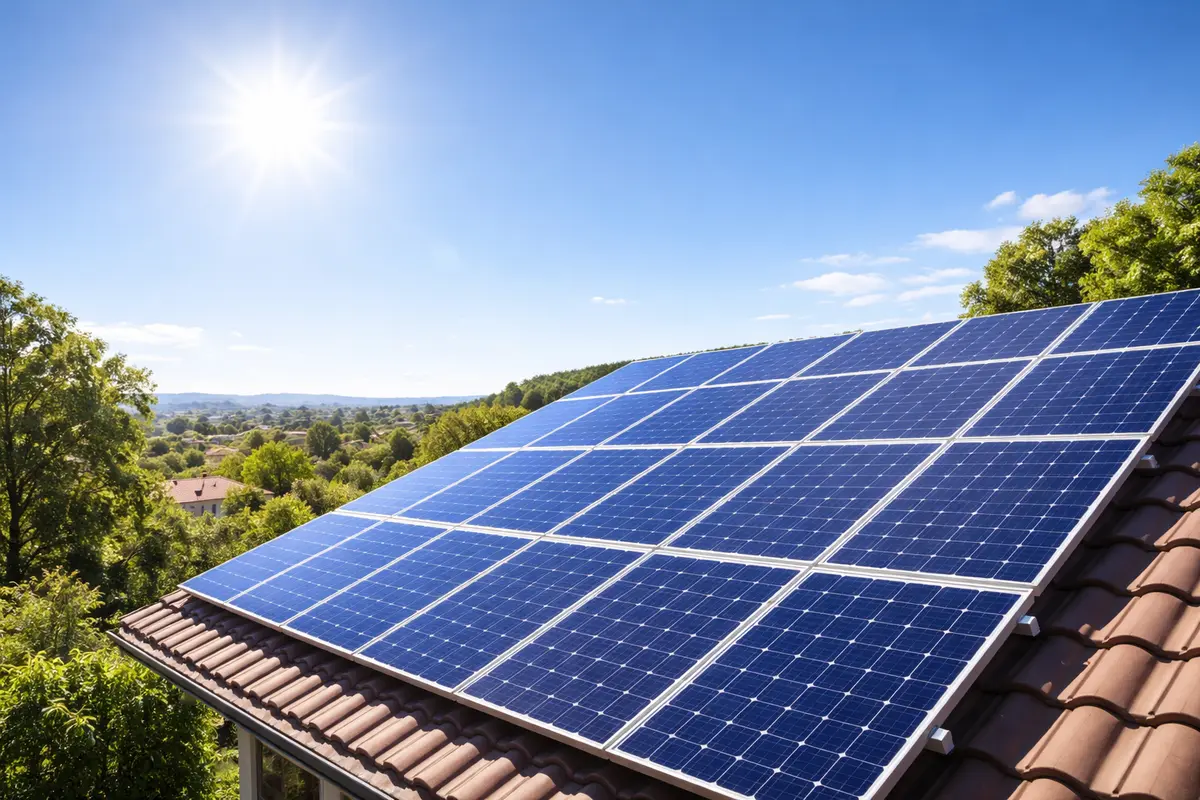
The 10kW refers to the solar panel's DC power rating at Standard Test Conditions. However, the solar panel's actual output can vary.
The factors that can influence the solar panel's output include:
The formula that can be applied to calculate the energy generated by solar panels is:
Daily Energy (kWh) = System Size (kW) * Peak Sun Hours * System Efficiency Factor
Most grid-tied systems operate at 75% to 85% efficiency, once all losses have been taken into account.
Let's give some more realistic estimates, based on average peak sun hours in different locations in the United States:
| Location | Peak Sun Hours | Daily Output (kWh) | Annual Output (kWh) |
|---|---|---|---|
| Arizona | 6.5 | 10 × 6.5 × 0.8 = 52 kWh | ~18,980 |
| California | 5.5 | 44 kWh | ~16,060 |
| Texas | 5.0 | 40 kWh | ~14,600 |
| Florida | 4.5 | 36 kWh | ~13,140 |
| New York | 4.0 | 32 kWh | ~11,680 |
These estimates are based on an 80% efficient system.
Let's make it more practical:
A household in the United States consumes an average of 10,500 to 11,000 kWh of electricity annually.
This means that:
Let's give an example:
A home using 900 kWh per month (10,800 annually) would likely achieve full offset in Arizona or California, but might need slight grid support in New York during winter months.
The 10kW system rating is usually based on the DC capacity (solar panels). However, electricity used in homes is AC output after the inverter converts the DC output.
Inverter efficiencies are now around:
Thus, a 10kW system could produce 9-9.6kW AC output during peak sunlight.
Solar panels have lower efficiencies at higher temperatures.
The majority of crystalline silicon panels have a temperature coefficient between -0.3% to -0.5% per °C above 25°C.
In hot climates:
That’s why proper ventilation and mounting structure design are important.
Interestingly, cold sunny days can produce very strong output. Panels actually perform better in cooler temperatures if sunlight is strong.
In addition to 10kW systems, homeowners are now using battery storage systems. This is especially true with the introduction of lithium-iron-phosphate (LiFePO4) batteries.
Here’s a general idea of how a 10kW system could be paired with battery storage.
The battery storage system could store electricity during the day.
The battery could also supply electricity during a power outage or at night.
In my opinion, this pairing could make more financial sense if you have time-of-use tariffs or unreliable electricity supply.
Solar panels have lower efficiencies over time.
Degradation rate: 0.5% per annum
After 25 years, the system could produce 85-88% of its original capacity.
For a 10kW system that produces 16,000kWh electricity per annum, after 25 years, the system could produce 14,000kWh electricity per annum.
A 10kW system is appropriate for:
For commercial spaces, the size of the solar system can vary depending on the load. It can range from 50kW to 100kW and sometimes MW.
But 10kW can be a great entry point for many reasons. It is suitable for residential homes. It matches the energy demand of an average home. It provides a cost-effective solution for energy independence.
Not always.
The right size of the solar system can depend on:
For example, if you are planning to install an electric vehicle charging system and estimate 3,000 to 4,000 kWh annual usage, a 10kW solar system can be the right size for you.
Here is a simple snapshot of the solar system’s expected performance:
A 10kW solar system can provide enough power to meet the energy requirements of an average home in most sunny locations. However, the amount of energy produced varies depending on the location and other variables. It is essential to understand the variables to set realistic expectations and ensure the right size of the solar system is installed.