2026-01-20
In a standard 40-foot Battery Energy Storage System (BESS) container, the number of battery racks typically ranges from about 8 to 24 or more. This depends on design choices such as energy capacity, battery type, cooling method, and other included components.
This answer is straightforward, but to understand why rack counts differ and what it means for system design, let’s explore the details.
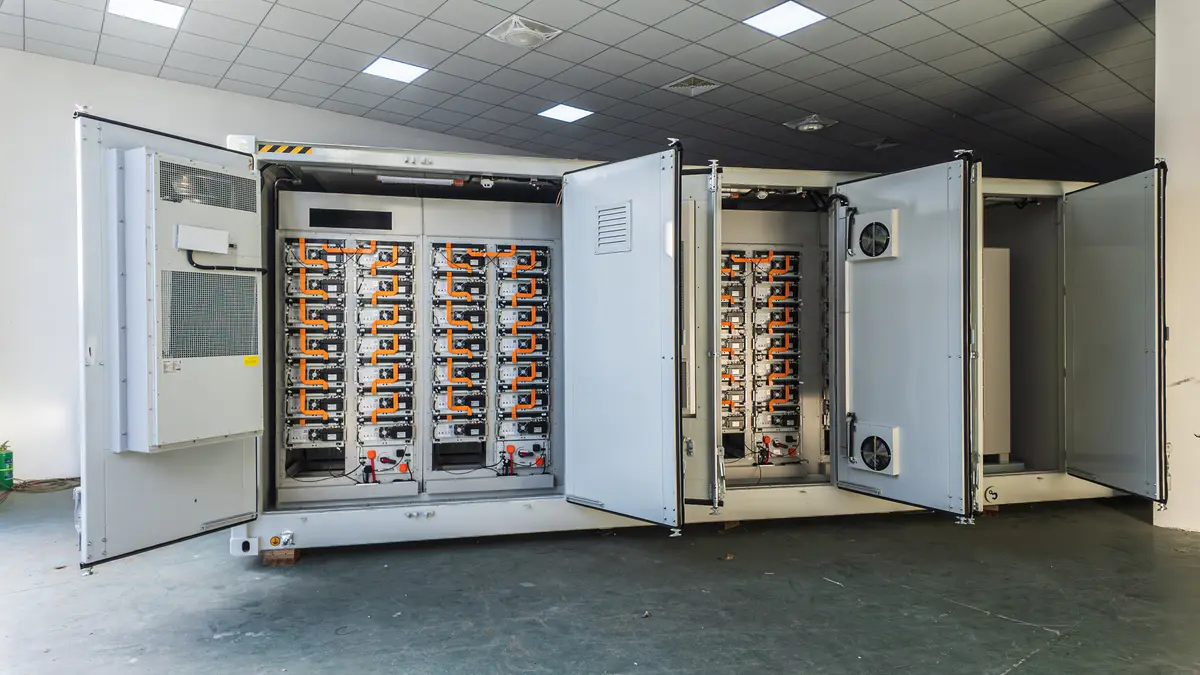
Depending on the manufacturer and energy capacity targets, these are common setups:
| System Type / Capacity | Approx. Battery Racks | Notes |
|---|---|---|
| ~1 MWh (Commercial) | ~8 racks | Common for lower energy applications, often paired with PCS and auxiliary components. |
| ~2–4 MWh | ~12–18 racks | Balanced design for mid‑range utility and commercial use. |
| Up to ~6.5 MWh (Battery‑only) | ~24 racks | Larger energy‑dense setups where container space is focused on batteries. |
| General industry guidance | ~20 racks | Typical design referenced in a technical overview. |
Before going further, it's important to explain what “battery rack” means in a BESS context:
For example, a 20-foot container from an industry datasheet showed 12 racks with 4 modules per rack as part of a 5 MWh solution.
Simply knowing the rack count doesn’t provide the full picture. Here are a few additional factors I’ve seen as a BESS design engineer:
The amount of energy you want to deliver determines the rack count more than the container size itself. Two 40ft containers could each have 12 racks for a mid-range installation, or one could be battery-only with about 24 racks for a large utility project.
Each rack could hold different numbers of modules, and module designs vary in energy density, voltage, and shape.
Containers that include large power conversion systems (PCS), transformers, and Energy Management Technology (EMT) cabinets reduce the floor space available for racks.
When planning a 40ft BESS container, these factors influence rack choices:
Battery racks heat up during charge and discharge. Proper thermal management is crucial. More racks in a tight space require good airflow or liquid cooling designs, which may reduce usable rack space for safety reasons.
Designers often leave space between rack rows to allow technicians to service the system. While a compact, dense layout maximizes capacity, it may hinder maintenance.
Having more smaller racks might provide better redundancy than fewer large ones. This is especially important in applications where uptime is critical.
Here’s a snapshot from typical industry data:
Here are a couple of trends influencing the number of battery racks in future 40ft BESS containers:
As cell technology, like LiFePO4 and newer chemistries, improves, each rack can deliver more energy. This means achieving the same total capacity with fewer racks, or more capacity without increasing the number of racks.
Large utility projects rarely rely on a single container; they connect multiple units in parallel. This approach standardizes and optimizes rack count per container for transport and ease of deployment.
New cooling systems, such as more efficient liquid cooling, may allow for denser rack layouts without overheating issues, increasing the limits of what can fit in a 40ft footprint.
Understanding not just the number of racks but the reasons behind that number will help you make informed design decisions when planning a 40ft BESS container solution.